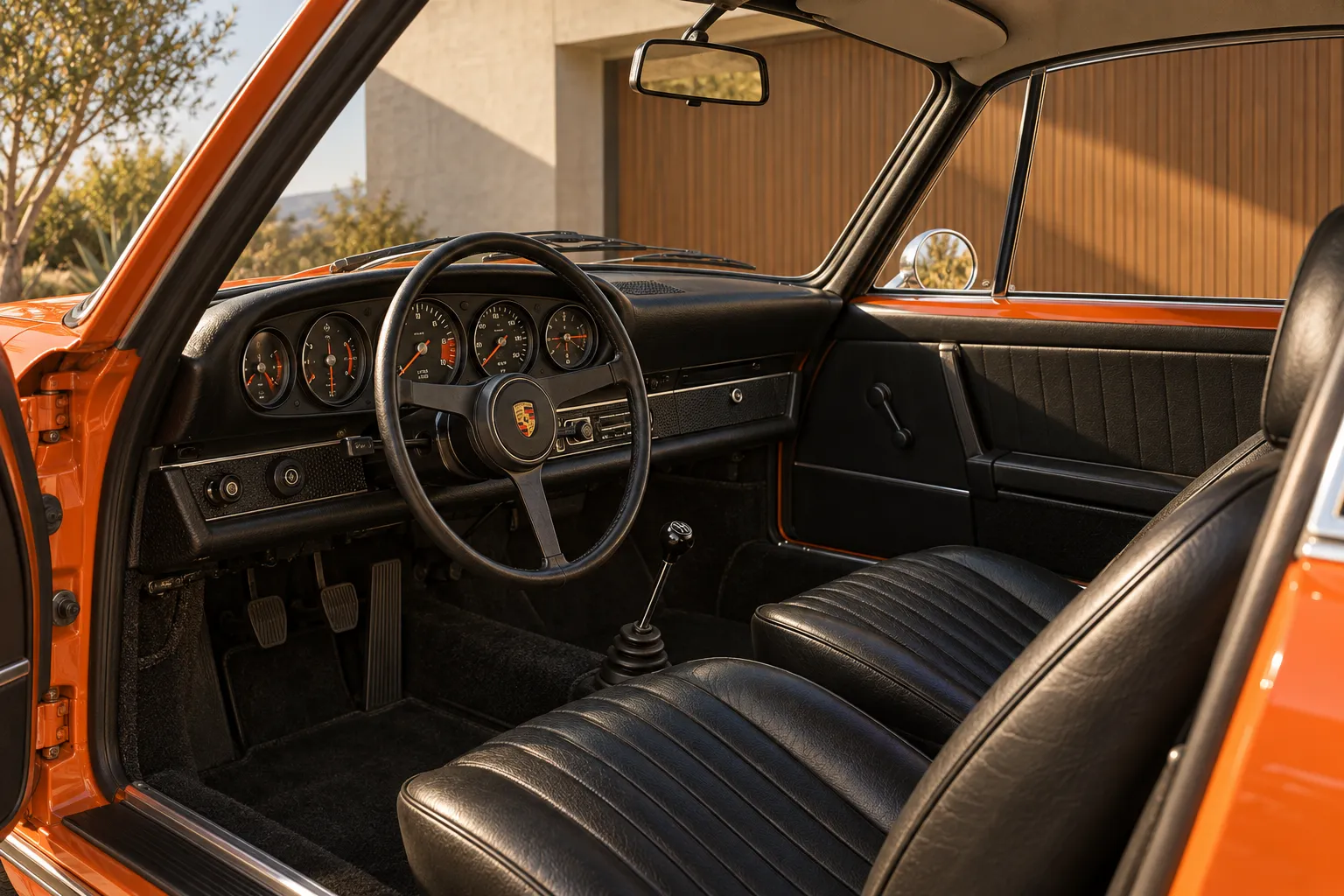
The steering wheel in my first old car had a smooth patch at ten o’clock. It was a small detail, almost invisible, but my hand found it every time. Someone else had been there before me. For years, perhaps. I found that oddly reassuring.
We have become very good at making old things look new. The skills involved are extraordinary, and there are cars that owe their continued existence to a patient, painstaking restoration. But there is another kind of care: knowing what to leave alone.
A gently creased seat tells you where someone sat. The faint scuff on a sill suggests a thousand departures. A handwritten date on a service label connects an object to an ordinary afternoon in a workshop. None of these things is grand. Together, they make a history.
“The marks that matter are often the ones you would never think to photograph.”
Of course, patina is not a substitute for sound maintenance. A cherished car should still start, stop, and carry its occupants with confidence. The distinction is between the wear that gives something character and the neglect that takes it away.
When I look at a car now, I try to spend a little less time searching for perfection and a little more time understanding the life it has had. The best examples have a consistency to them. Their details tell the same story.
That smooth patch on the steering wheel grew a little larger while the car was mine. I like to think the next keeper’s hand found it too.