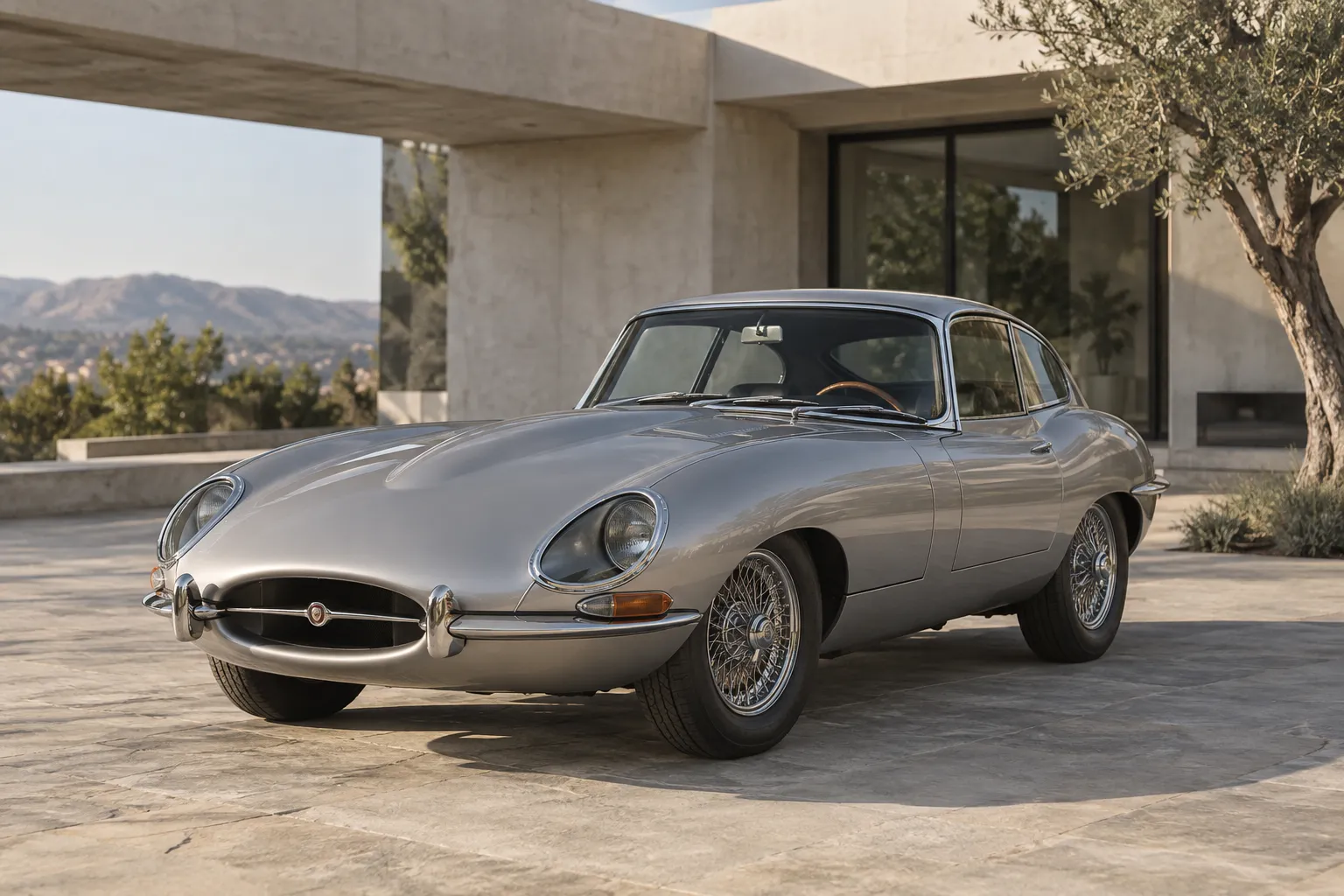
There is a moment, just before you open the door, when a car is simply an object. No sound, no speed, no figures to compare. Just a shape resting in the light. It is a useful moment. It tells you something that a specification sheet never will.
Consider the long, unbroken curve of an E-Type bonnet. Or the way a Pagoda roof seems to balance on the finest possible pillars. These are forms that have become so familiar we sometimes forget to look at them. A change of light, a different angle, and suddenly they are new again.
Good automotive design has a difficult brief. It must move air, accommodate people, enclose a machine, and meet the ordinary demands of a working day. The remarkable cars are the ones that make all of this seem incidental, as if beauty happened first and the practicalities politely arranged themselves around it.
“A beautiful car gives you a reason to pause before you turn the key.”
This is why the cars we love do not always correspond with the cars we are told to admire. A small saloon with the right stance can be more compelling than a grand machine with nothing to say. Proportion has no interest in prestige.
Perhaps the closest comparison is with a favourite chair, a good camera, or a well-used fountain pen. These objects ask to be touched. Their beauty is completed by the act of using them. A car in motion is a drawing being finished.
Our collection this month is an invitation to look a little longer. Walk around. Notice the curve where the wing meets the door. Then get in, turn the key, and let the object become an experience.