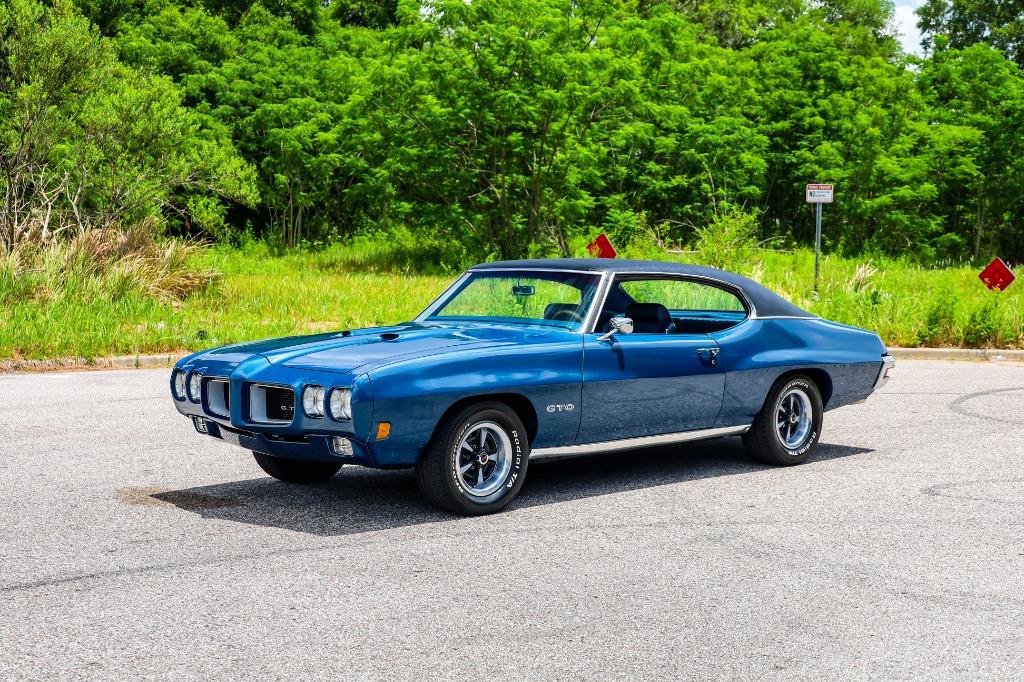
The second-generation Pontiac Firebird arrived late. Tooling troubles held it back until February 1970, so the first cars are known as 1970½ models. Bill Porter's design traded the original Coke-bottle curves for something smoother and longer, and from 1975 a wraparound rear window gave the F-body its most familiar silhouette. There was no convertible. This was a coupe, and it knew it.
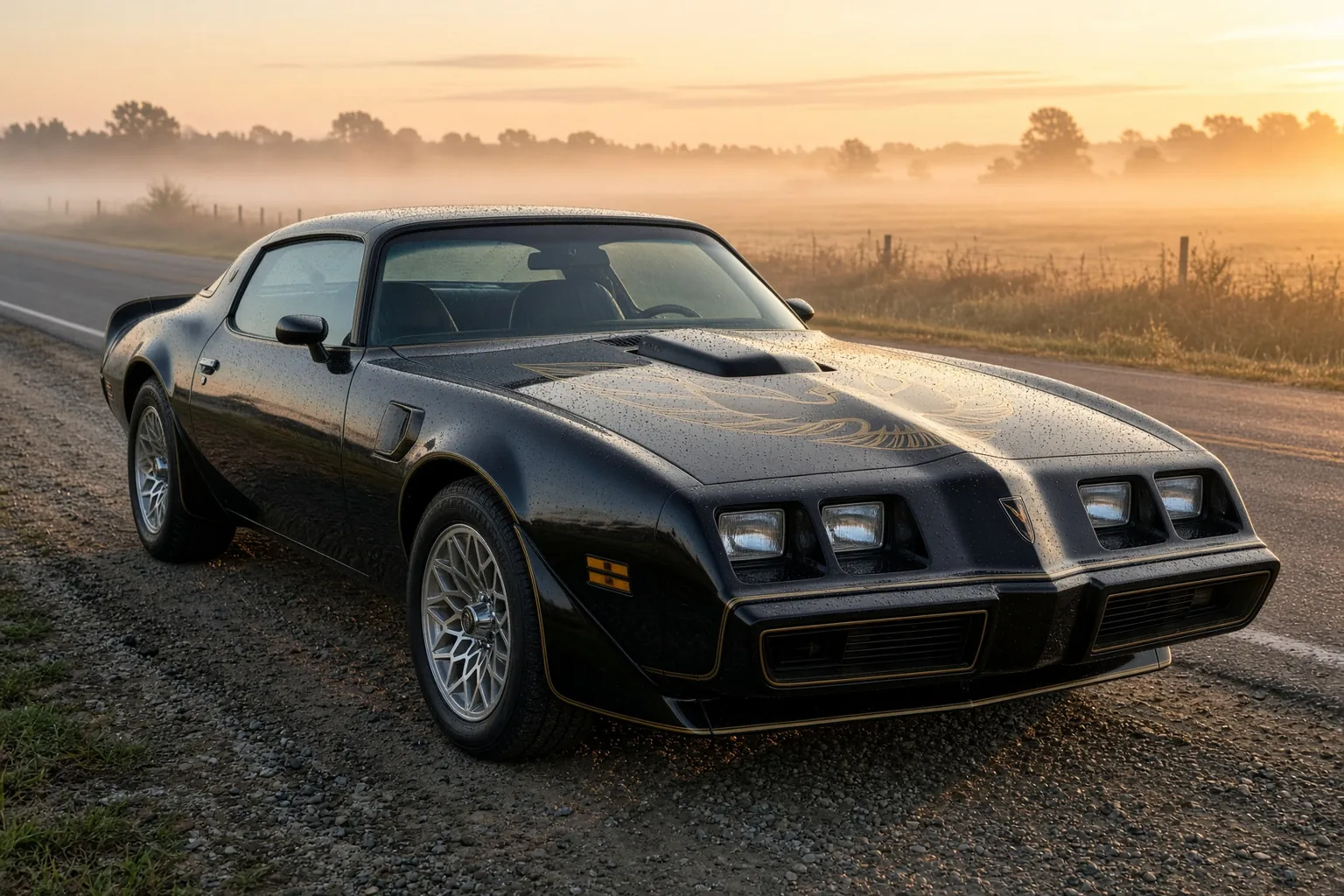
Our listings lean towards the late seventies, which is fitting, because that is when the Firebird became itself. The 1977 facelift brought four rectangular headlamps and the black-and-gold Special Edition that Smokey and the Bandit turned into a poster favourite. Snowflake wheels, a shaker scoop, gold pinstriping. Even the quieter colours look confident in this body.
By 1979 the Trans Am was ten years old, and Pontiac celebrated with a restyled nose and a record: 116,535 Trans Ams sold, the most in any year. Car and Driver named the WS6 Trans Am the best-handling car of 1979. The T/A 6.6 was the last of the big Pontiac V8s, rated at 220 horsepower, a figure period dyno tests found conservative. In 1980 the large engines went away, and in 1981 the generation ended.
“Even the quieter colours look confident in this body.”
Driving one now is a small seventies ceremony. The long door swings wide. The shaker scoop trembles when the V8 wakes. With the T-tops out, the cabin fills with warm air and the honest smell of a carburettor at work. The WS6 cars, with their tighter steering and larger rear sway bar, carry speed through corners in a way their ancestors would not have believed.
Ownership is mostly patience with plastics that were never meant to last, and a healthy respect for rust in the usual places. The reward is a car that gathers attention without asking for it. The examples listed now are worth a slow look, the 1979s especially.