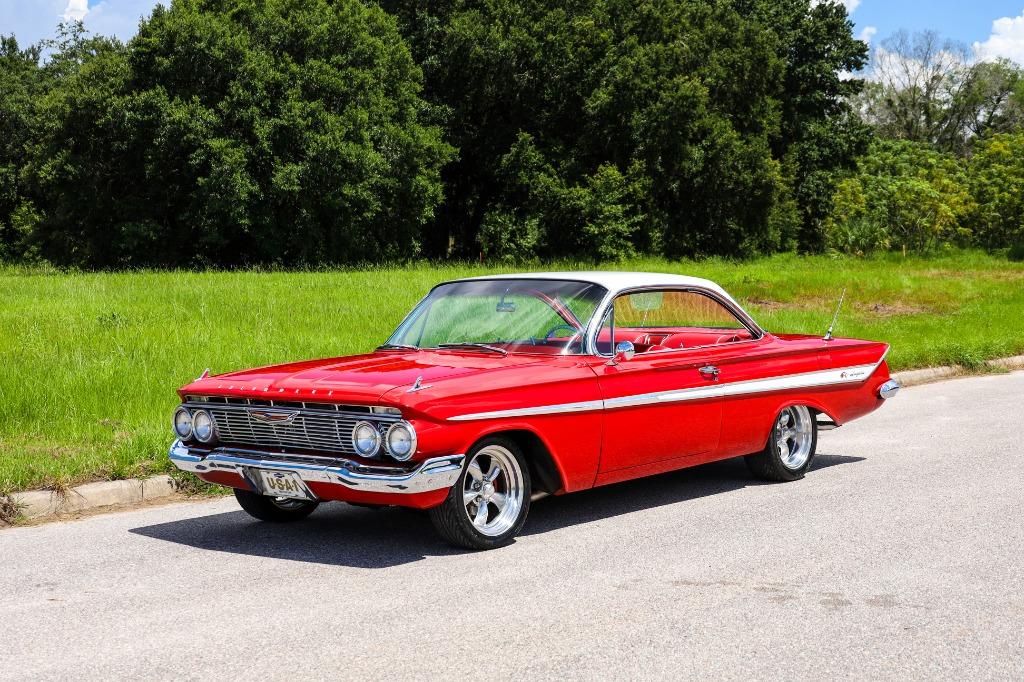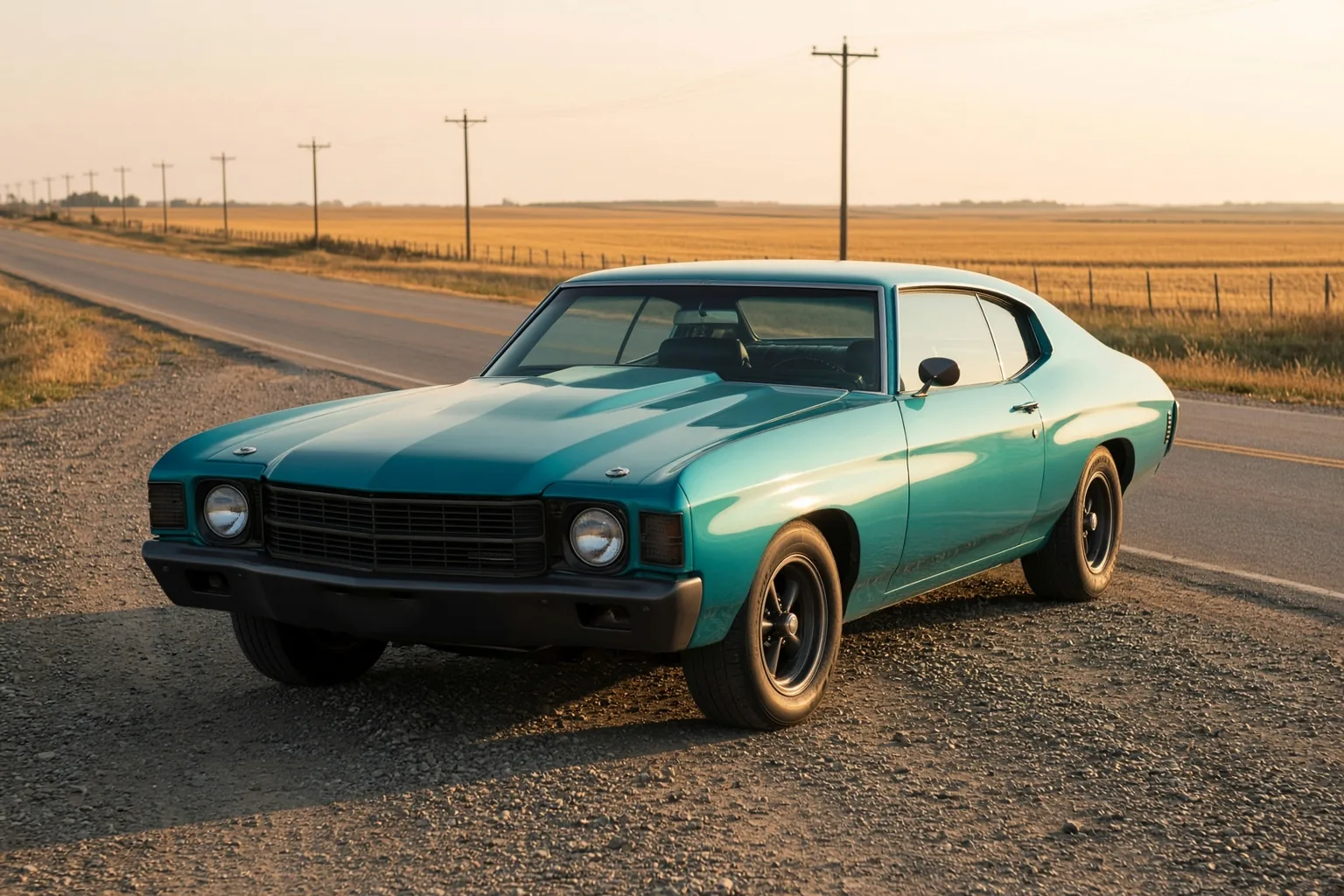
The Chevelle of 1968 to 1972 is the one people mean when they say Chevelle. It arrived with new, sculpted sheetmetal: tapered front fenders, a rounded beltline, a long hood and a short deck, and a flowing roofline that borrowed from the new Camaro. Coupes rode a 112-inch wheelbase. It looked broad-shouldered, and it was.
The Super Sport carried the story. In 1968 the SS 396 came with 325, 350 or 375 horsepower; in 1969 it stepped down from a series to an option package. Then came 1970. The SS 396 badge survived, even though the engine beneath it had quietly grown to 402 cubic inches. Above it sat the SS 454: 360 horsepower, and beyond that the LS6, with 450 horsepower, 500 pound-feet of torque and a cowl-induction hood whose flap opened at full throttle. Fewer than five thousand buyers ordered the LS6.
After 1970 the tide went out. Compression fell for 1971 to suit low-lead fuel, the styling turned square, and the biggest engine settled at 365 horsepower. Insurance surcharges did the rest. The second generation closed quietly in 1972, and the Malibu name swallowed the Chevelle entirely after 1977.
“The big block does not so much accelerate as lean into its torque.”
Driving one today is a physical pleasure. The big block does not so much accelerate as lean into its torque. The Muncie four-speed needs a firm hand, the steering is slow, and you plan your stops. There is nothing delicate about it, and that is the appeal. Almost every component is reproduced today, which keeps ownership honest and unhurried.
The listings are full of them at the moment, from six-cylinder sedans in quiet colours to big-block sport coupes, with 1970 the best-represented year by some distance. More than 440,000 Chevelles found homes that year, which explains the abundance. Pour something, settle in, and take the long way through the photographs.