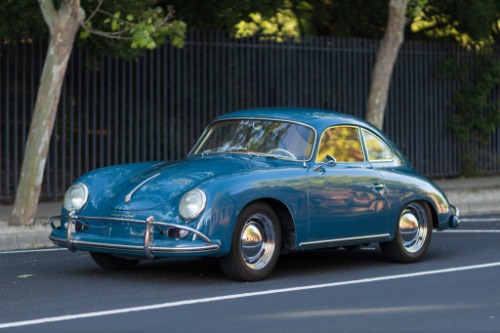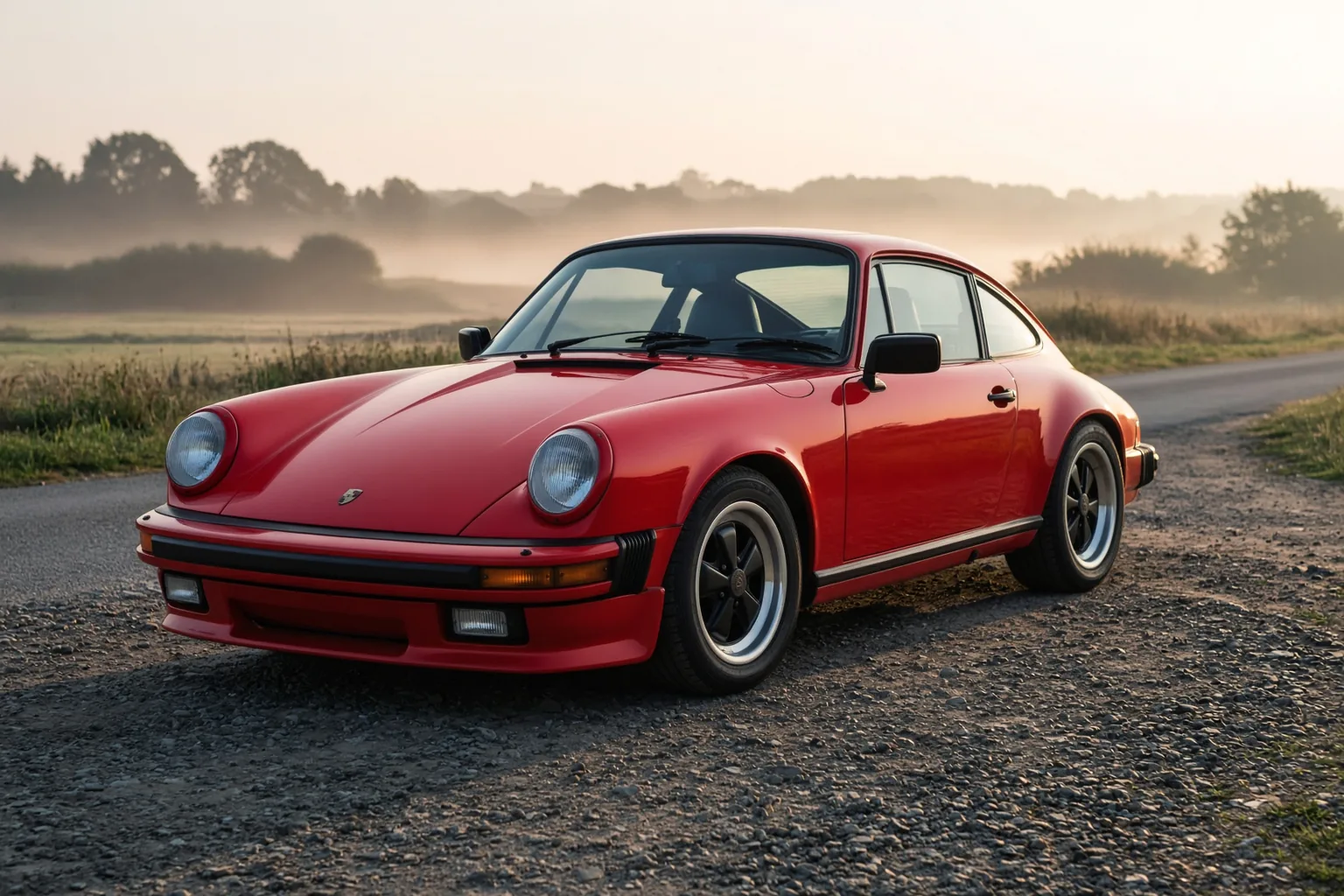
Every 911 built between 1974 and 1989 wears the impact bumpers. They arrived to satisfy American regulations, and the shape simply absorbed them. What Butzi Porsche drew in 1959 put on heavier boots and carried on.
The years underneath tell the longer story. 1974 brought a 2.7-litre engine and Bosch fuel injection, plus a whale-tail spoiler invented because the German authorities had outlawed the ducktail. In 1978 the range settled to one naturally aspirated model, the SC, its 3.0-litre flat-six rated at 180 PS and later 204. A proper Cabriolet arrived in the SC's last years, the first fully open 911. Porsche expected the SC to be the last of the line; the front-engined 928 was waiting. Buyers disagreed, roughly twenty to one.
The 911 had the last word in 1984, when the Carrera name returned on a 3.2-litre making 231 bhp in European tune. It was the first production 911 with an ECU managing fuel and ignition, and a smoother Getrag gearbox arrived in 1987. The formula never moved: flat-six behind the rear axle, air cooling, five well-chosen gears.
“What Butzi Porsche drew in 1959 put on heavier boots and carried on.”
Driving one now is a conversation. The flat-six hums behind your shoulders and warms the cabin with a faint smell of oil. The gear lever is long and honest. The car tells you what it is doing and expects you to listen, which is most of the pleasure.
Sixteen model years share one silhouette, which is why the whole run is commonly called the G-series, whatever the factory letters said. It is the longest-lived 911 generation, and a sensible place to fall for the breed. The examples listed with us run from the early bumper cars deep into the 3.2 era. They repay an unhurried afternoon.